Your Go-To Guide for Rooftop HVAC Check-Ups in Chicago's Commercial Spaces
Rooftop HV AC units are the unsung heroes of commercial buildings. They keep everyone comfortable, protect what’s inside, and help keep energy costs in check all year round. But because they’re out of sight, they can be overlooked until something goes wrong. Regular inspections are key to catching problems early and keeping everything running smoothly. Pair this with planned HVAC system maintenance to tackle small issues before they become big headaches.
Today’s approach to maintenance has changed. Instead of waiting for things to break, many places now use proactive check-ups, tools, and smart data to spot issues early. The focus is on changing filters, checking parts, and seasonal tune-ups to keep things efficient and extend the life of your equipment. Want to dig deeper into the world of rooftop HVACs? Start with our guide to rooftop HVAC units.
In this article, you’ll find out why rooftop HVAC inspections are crucial, what experts check, how often they should be done, and how regular maintenance can save money in the long run. We’ll also share real-life stories, current industry trends, and practical steps to keep your commercial HVAC systems in top shape. For more on keeping your system efficient, check out the U.S. Department of Energy's advice on maintaining air conditioning equipment.
Why Rooftop HVAC Inspections Matter
Keeping Things Comfortable and Business Running Smoothly
Stable indoor temperatures are more important than you might think. If a rooftop unit isn’t working right, it can create hot or cold spots, affect productivity, and lead to complaints. In spaces like shops, restaurants, and offices, temperature issues can quickly turn into customer service problems. Regular inspections catch things like worn-out parts and airflow problems before they cause disruptions.
Saving Energy
When rooftop HVAC units aren’t clean or properly calibrated, they have to work harder, which shows up on your energy bill and wears out the equipment faster. Regular check-ups ensure everything from compressors to fans is working as it should. Even small issues like a clogged filter can reduce efficiency for weeks.
Making Equipment Last
Rooftop units are a big investment, and replacing them is costly. Regular inspections can catch problems early enough to fix them without breaking the bank. Take the case of BERMO, Inc., which managed to extend the life of 24 heating and cooling units to over 40 years—three times the average lifespan! This was thanks to consistent preventive maintenance. For more on keeping your system in shape, pair inspections with filter replacement and maintenance.
What’s Happening in the HVAC World?
Proactive Maintenance is the New Norm
Instead of reacting to problems, the industry is moving towards planning. Building managers now prefer services that catch changes before they lead to failures. This shift is due to the cost of downtime, energy concerns, and the need to extend equipment life. Inspections now often include trend reviews and predictive diagnostics to catch issues before they escalate.
Advanced Tools and Predictive Analytics
Technicians use digital tools to get precise readings on temperature, refrigerant performance, and airflow. Predictive analytics can highlight issues like a motor failing or a control loop going off track. These tools are crucial for buildings with multiple tenants, where even small disruptions can be a big deal. While not every building needs advanced monitoring, basic trend tracking can help with maintenance timing.
Energy Management and Building Controls
Many owners are now linking rooftop units to bigger systems like energy dashboards. This setup helps track how units perform during peak times or bad weather. If reducing energy waste is a goal, pair inspections with smart control strategies or energy management systems. The EPA’s ENERGY STAR program also offers insights into why efficient HVAC operation is important through its building efficiency resources.
How Often Should Rooftop HVAC Units Be Checked?
The Twice-a-Year Rule
Most commercial buildings should have their rooftop units inspected twice a year, ideally before heating and cooling seasons. This ensures the equipment is ready when demand peaks. Seasonal checks allow technicians to replace worn parts and fix airflow issues before they cause problems.
When More Frequent Checks Make Sense
Some buildings might need more frequent inspections. Places with lots of people, sensitive products, or older equipment might benefit from quarterly checks. Buildings in harsh climates like Chicago are good candidates for more frequent monitoring because of the extreme weather. If your unit has a history of issues, more frequent checks can help.
Signs You Shouldn’t Wait for the Next Scheduled Visit
Keep an eye out for warning signs like unusual noises, weak airflow, or a sudden increase in energy use. If you notice these, a repair-focused visit might be needed. Early action can prevent small issues from becoming big failures. If you see these signs, our HVAC repair service can quickly diagnose and fix the problem.
What Do Technicians Check During an Inspection?
Air Filters, Coils, and Airflow
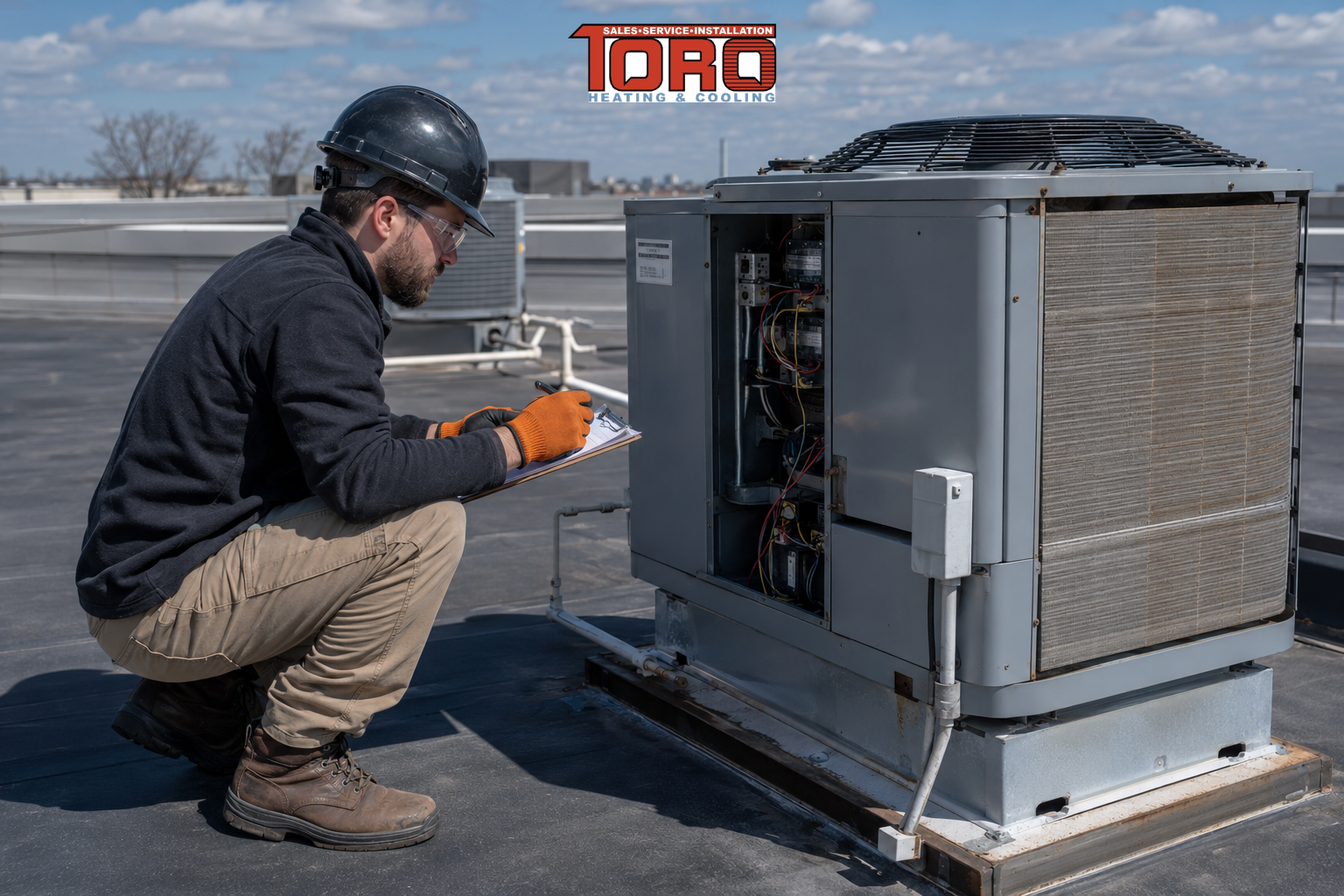
Inspections start with airflow basics. Technicians check filters for dirt, inspect coils, and ensure air moves properly through the system. Dirty coils can block heat transfer, while clogged filters strain fans and reduce comfort. These are common yet preventable issues with regular inspections.
Compressors, Fans, Belts, and Motors
Techs also look at the mechanical parts. Compressors should operate within expected ranges, fans should be balanced, belts properly tensioned, and motors should show no overheating signs. Small defects can cause vibration and noise. A thorough inspection combines observation with measurements and tests.
Electrical Connections and Controls
Loose wires, damaged contactors, and faulty sensors can cause intermittent problems. Inspections check that electrical connections are secure and controls respond correctly. If there are control issues, thermostat services may help resolve them.
Weather Exposure and Drainage
Because these units are outdoors, weather protection is part of the inspection. Techs check for standing water, clogged drains, rust, and damage. Preventive care here protects both the HVAC unit and the roof structure.
Real-Life Examples of the Value of Inspections
BERMO, Inc. and Long-Term Care
BERMO, Inc. shows how disciplined maintenance pays off. By sticking to a strong maintenance plan, they extended the life of their units significantly. This shows that treating a rooftop unit as a long-term asset can deliver much better value.
Walgreens and Big Energy Savings
Walgreens’ Advanced Rooftop Unit program is another example. They installed over 4,370 high-efficiency units and saved more than 39 million kWh annually. While not every business operates at this scale, the principle still applies: inspections keep performance in line with the efficiency your building was designed for.
Lessons for Smaller Buildings
Even if you manage a single building, these examples matter. Smaller properties feel HVAC issues more because they have fewer backup options. Regular inspections help avoid emergencies and provide a clear picture of equipment condition. If you need broader support, our commercial HVAC services are designed to help.
Best Practices for Preventive Maintenance
Create a Seasonal Service Calendar
Stay ahead of rooftop problems by planning inspections before each major season. Spring checks ready the system for cooling demand, and fall checks prepare for heating. A written calendar is more reliable than memory, especially for busy property managers.
Replace Filters Regularly
Regular filter maintenance is crucial for air quality and system efficiency. Clogged filters restrict airflow and reduce performance. The right schedule depends on usage, but regular checks are key. For more dusty environments, air duct cleaning can also help.
Document Everything
Keep good records of each inspection, noting component conditions, readings, and recommendations. This makes it easier to spot trends and plan upgrades. It also helps different technicians work from the same information.
Focus on Long-Term Fixes
It’s tempting to go for quick fixes, but they often lead to repeat calls. It’s better to find root causes and address them. If your equipment is nearing the end of its life, consider a more comprehensive solution like HVAC installation.
Unique Challenges for Chicago Buildings
Cold Winters and Hot Summers
Chicago’s weather is tough on rooftop HVAC equipment. Units must handle freezing temps, snow, wind, and hot summers. This constant strain makes inspections essential for reliable operation.
Urban Rooftops Pose Service Challenges
Urban rooftops can complicate service with limited space and access issues. Scheduled inspections help reduce surprises and make planning easier.
Local Expertise Matters
Local knowledge helps technicians account for weather, building design, and seasonal demands. If your building is in Chicago, working with a contractor who understands local conditions can make all the difference. Check out our HVAC services and Chicago service area expertise for more.
Common Questions About Rooftop HVAC Inspections
Can Inspections Really Prevent Costly Repairs?
Yes. Preventive inspections catch issues early, saving money on emergency repairs. Over time, these savings add up as minor corrections are cheaper than major replacements.
What Are the Warning Signs a Unit Needs Maintenance?
Watch for uneven temperatures, weak airflow, strange noises, or rising energy bills. Odors can also signal trouble. For more on HVAC smells, see our guide to HVAC smells.
Is Maintenance Worth It for Older Equipment?
Definitely, as long as the unit is safe. Older systems often benefit from scheduled inspections, extending their life. If repairs are no longer practical, our repair service can help decide the next steps.
Using Inspection Findings for Better Performance
Plan Upgrades Based on Findings
Use inspection reports to guide decisions. If a unit has recurring issues, it might be time for a targeted upgrade. This improves reliability and protects budgets.
Coordinate HVAC Care with Other Systems
Rooftop units interact with other systems, so performance in one area affects the rest. A full-service strategy often includes ventilation system services and control checks.
Track Results Over Time
Justify inspections by tracking results. Compare bills, complaints, and repair frequency before and after maintenance. Even modest improvements can pay for the cost of service.
Conclusion: Regular Inspections Pay Off
Rooftop HVAC units are too important to ignore. They help keep everyone comfortable and business costs low, making regular inspections a smart investment. The benefits are clear: better performance, longer life, fewer emergencies, and improved indoor conditions.
The best way forward is simple. Check units before each season, change filters regularly, document findings, and act fast when you see warning signs. If you manage a commercial property and want a proactive plan, Toro Heating & Cooling can help with tailored maintenance and care. Learn more about our planned maintenance options or contact us to craft a smarter HVAC strategy for your building.
Need help with your rooftop HVAC equipment? Call Toro Heating & Cooling at (773) 202-9933 or visit our website for commercial HVAC support and maintenance services.