Choosing Your New HVAC System: Understanding SEER and AFUE Ratings
Picking a new HVAC system is a big decision for anyone who owns a home or business. It impacts comfort, health, and potential savings on your energy bills. Let's dive into what SEER and AFUE ratings mean, why the new SEER2 and AFUE2 standards (effective from January 1, 2023) are important, and how to find the best balance of efficiency and value for your needs. By the end of this, you'll know how cooling and heating efficiency ratings affect your energy costs and the steps to take before making a purchase.
Planning ahead and getting expert advice can make a huge difference when upgrading your HVAC system. If you're thinking about replacing your equipment, book a consultation to avoid common mistakes that can compromise comfort and efficiency. For ongoing care and to extend your system's lifespan, consider regular HVAC maintenance by certified technicians. And if you're ready to explore new options, we offer tailored HVAC installation services.
1. Understanding SEER and SEER2: Cooling Efficiency
What is SEER?
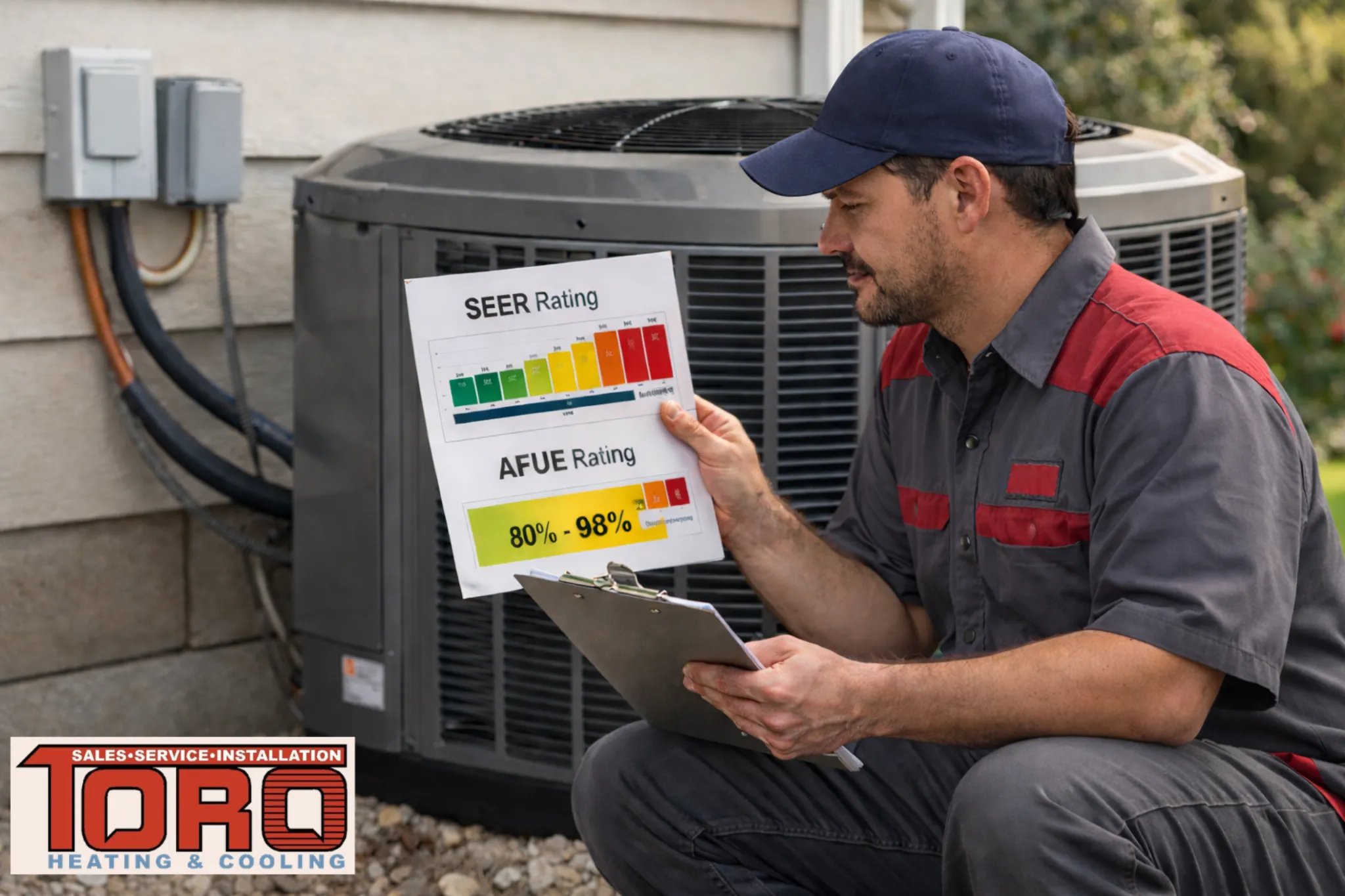
SEER stands for Seasonal Energy Efficiency Ratio. It measures how efficiently air conditioners and heat pumps cool your space over a season. Think of SEER as a ratio: it compares the total cooling output with the total electrical energy used. A higher SEER means more efficient equipment, which uses less electricity to cool your home, saving you money on utility bills during warmer months.
SEER helps you compare different air conditioners and heat pumps. While manufacturers might highlight certain features, SEER gives you a standard way to compare models. Just remember, SEER reflects seasonal averages, not moment-to-moment performance.
Why SEER2 Replaced SEER in 2023
On January 1, 2023, the Department of Energy updated the testing methods and minimum efficiency standards, introducing SEER2. SEER2 includes more realistic testing conditions that account for factors like external static pressure and ductwork. This means a model's SEER2 value might differ from its old SEER rating, and federal efficiency standards have been adjusted.
These updates aim to give you a more accurate idea of how a system performs once installed in a typical setting. For more on these standards, check out information from the Department of Energy. Knowing about SEER2 is crucial when shopping for new systems since comparisons need to use the same standard to be meaningful.
How SEER2 Affects Your Choice of Cooling Equipment
With SEER2 as the new standard, look at the SEER2 ratings when comparing air conditioners and heat pumps. In many areas, the minimum SEER2 requirement has been raised, meaning some models don't meet new federal standards. While higher SEER2 units might cost more initially, they can save you money over time by using less energy.
Choosing the right efficiency level involves balancing cost and expected savings. Consider factors like cooling degree days in your area to decide if investing in a higher SEER2 model will pay off. Our AC installation team can help you compare models and estimate savings for your specific needs.
2. Understanding AFUE and AFUE2: Heating Efficiency
What is AFUE?
AFUE stands for Annual Fuel Utilization Efficiency and measures the heating efficiency of furnaces and boilers that burn fuel. It's expressed as a percentage and shows how much fuel is converted into heat. For instance, a furnace with an AFUE of 90% turns 90% of the fuel into heat, while 10% is lost.
AFUE is a good metric for comparing gas or oil furnaces. Higher AFUE ratings mean lower fuel use for the same heating output, which could lower your winter energy bills and reduce environmental impact. Homes in colder areas should look for higher AFUE ratings to keep fuel costs down.
Why AFUE2 Matters After 2023
Similar to SEER2, AFUE2 uses updated testing procedures to better reflect real-world conditions. It considers things that older tests didn't, like installation-related factors that affect efficiency. As a result, there have been small increases in minimum efficiency ratings to encourage systems that perform well outside the lab.
Homeowners should ask for AFUE2 ratings when comparing furnaces. A higher AFUE2 rating can mean real savings during Chicago's long heating season, especially if your system runs often or your home has high heat needs. We suggest getting a heating assessment before buying a furnace, and our furnace installation service can help you find the right AFUE2-rated equipment.
How AFUE2 Influences Heating Choices
High AFUE2 furnaces use less fuel but may cost more upfront. Condensing gas furnaces with AFUE2 ratings in the 90s are common, offering savings in colder climates. Choosing the right AFUE2 involves looking at local fuel prices, expected heating hours, and your home's insulation.
Sometimes, pairing a high-AFUE2 furnace with better insulation, air sealing, and good ductwork delivers the most savings. Systems like heat pumps can also help reduce fuel use during milder months, offering a balanced approach to comfort and cost.
3. How Efficiency Ratings Impact Your Energy Bills
Estimating SEER2 Savings
Efficiency ratings help you estimate running costs. For cooling, upgrading from a 14 SEER to a 20 SEER system can cut energy use significantly. Research shows around 13% savings on cooling costs when you make this upgrade. In Illinois, with average cooling costs of $600 to $800 per summer, you could save $200 to $265 annually.
Savings vary based on your cooling hours, thermostat settings, and insulation. To calculate savings, use local energy prices and realistic operating hours. A contractor can provide tailored estimates that account for local weather and your home's energy use.
Estimating AFUE2 Savings
For heating, improving AFUE means using less fuel. Replacing an 80% AFUE furnace with a 95% AFUE2 unit cuts fuel waste and can significantly lower heating costs, particularly in colder climates with long heating seasons. Actual savings depend on your fuel type and prices, but the efficiency improvement gives a clear sense of potential savings.
Since heating dominates energy use in winter, even small AFUE gains can make a big difference. When planning an upgrade, consider fuel price trends and check for utility rebate programs that can speed up payback. Our team can run detailed savings calculations and suggest efficient options based on your budget.
Balancing Cost and Savings
High-efficiency equipment usually costs more upfront but saves on running costs. A lifecycle analysis compares purchase and installation costs against expected savings over the system's life, including maintenance expenses and potential rebates.
For a balanced decision, calculate the simple payback period and consider non-financial benefits like comfort and reduced carbon footprint. If you like to dig into the details, ask for a comparison showing projected costs over five and ten years.
4. Choosing the Right SEER2 and AFUE2 for Chicago
Why Chicago Needs a Balanced Approach
With cold winters and hot summers, Chicago residents need to consider both heating and cooling efficiency. A balanced strategy usually pairs a high-AFUE2 furnace (90% or higher) with an air conditioner in the 16–18 SEER2 range. This ensures strong heating in winter and efficient cooling in summer.
Focusing too much on one aspect can lead to uneven results, like having an efficient cooling system but an inefficient furnace that drives up winter bills. A full evaluation that considers local weather and building heat loss is the best way to set targets.
Expert Recommendations
Local experts often suggest 16–18 SEER2 cooling units and 90%+ AFUE2 furnaces for gas heating in Chicago. These ranges optimize annual energy use and keep payback periods manageable. For older homes with leaky ducts or poor insulation, it's best to address those issues before investing in high-efficiency equipment.
Before buying, get a home energy assessment. Contractors should do load calculations and suggest improvements to maximize system effectiveness. Toro Heating & Cooling provides comprehensive assessments and can coordinate upgrades like duct sealing and insulation.
When to Go for Ultra-High Efficiency
Ultra-high-efficiency systems (20+ SEER2 or 95%+ AFUE2) are ideal for homeowners planning to stay long-term, facing high energy prices, or eligible for strong rebates. New constructions or major renovations also benefit from top-tier equipment because the added cost is often lower during a build than a retrofit.
If you plan to move soon or have inefficiencies that won't be fixed, ultra-efficient systems might not pay off. In such cases, aim for equipment that meets local recommendations and use other measures like programmable thermostats to manage use. If you're unsure which option suits you, contact us for personalized advice.
5. System Sizing, Ductwork, and Installation Best Practices
The Importance of Correct Sizing
Your equipment should match your home's heating and cooling needs. Oversized units cycle frequently, reducing comfort and efficiency. Undersized units might not maintain set temperatures. Proper sizing uses procedures like Manual J to determine exact needs, ensuring your SEER2 and AFUE2 equipment works efficiently.
Avoid rule-of-thumb sizing. Insist on a load calculation from your contractor. Our installation team follows industry standards and conducts accurate assessments before HVAC installation.
Ductwork and Static Pressure Considerations
Restrictions in airflow, leaks, and high static pressure in ducts can reduce your HVAC system's efficiency. Even a high-SEER2 air conditioner won't perform well if ducts are leaky or not properly sized. That's why SEER2 and AFUE2 consider these factors.
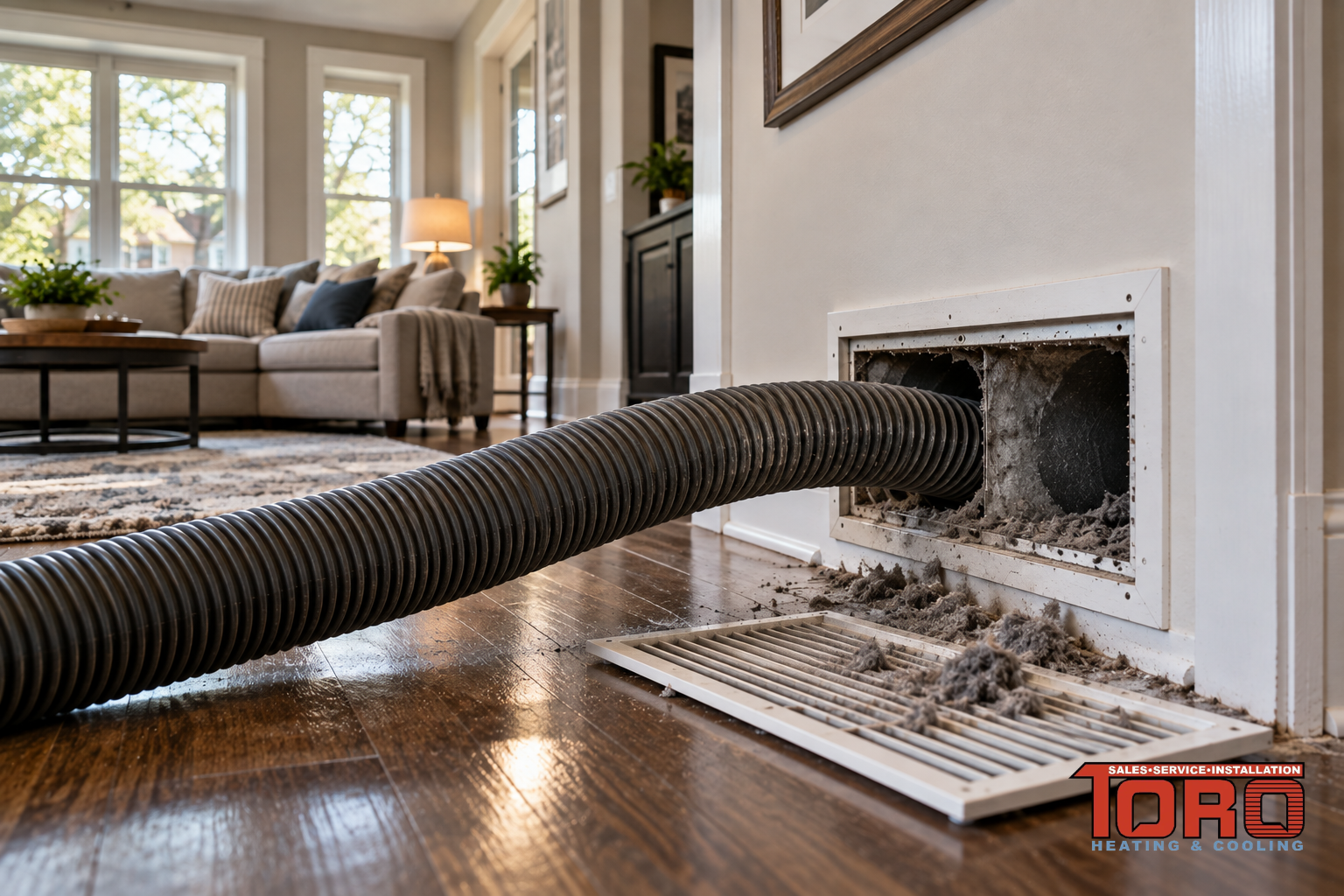
Improving ducts through sealing and correct sizing can save money and enhance comfort. Consider HVAC duct installation or HVAC duct repair if your ducts are old, damaged, or not suited to your new system.
The Role of Thermostats and Controls
Modern thermostats, including smart and zoning controls, can improve heating and cooling efficiency. They let you set schedules, access remotely, and use occupancy sensors to reduce runtime when heating or cooling isn't needed. Zoning systems let different building parts be conditioned independently, saving energy.
Thermostat placement matters too; the wrong spot can cause short cycling. For help with installation or upgrades, check out our thermostat services.
6. Rebates, Incentives, and Payback Strategies
Utility and State Rebates
Many utilities and state programs offer rebates for high-efficiency HVAC equipment, lowering the purchase price. In Illinois, programs from utility providers offer rebates for efficient air conditioners and furnaces, varying by equipment efficiency and conditions. These incentives aim to shorten payback times and encourage energy-saving tech.
Before buying, check for incentives and requirements, as some rebates need specific installation practices or pre-approval. We can help find eligible incentives and guide you through the paperwork to ensure you get all available benefits.
Federal and Tax Incentives
Sometimes federal tax credits and broader energy-efficiency incentives are available for qualifying equipment. These can change, so stay informed to capture opportunities that reduce net costs. Your contractor should document equipment specs and provide necessary statements for tax filings.
When calculating a system's true cost, include all incentives and tax benefits. This can repay part of the purchase price immediately and change the decision between different system tiers.
Calculating Payback and ROI
To calculate payback, estimate annual savings from efficiency improvements and divide the extra cost by those savings. For instance, if a higher-SEER2 system costs $2,000 more and saves $250 per year, the payback is eight years. Consider maintenance costs and equipment life when deciding if that payback meets your expectations.
A more detailed analysis includes net present value and projected energy price increases. If you prefer a precise financial breakdown, our technicians can create a multi-year projection tailored to your needs, including potential rebates and tax scenarios.
7. Case Studies and Real-World Examples
Residential Upgrade: Chicago Homeowner
A homeowner in Chicago replaced a 14 SEER system with a 20 SEER model, along with duct sealing and a programmable thermostat. Over five years, they saved about $1,000 in cooling costs, offsetting much of the initial cost. This combination of equipment and duct improvements also provided better comfort and quieter operation.
This shows that equipment alone isn't the whole story; improvements in distribution systems and behavior changes can enhance savings. If you're thinking about a similar project, our A/C system maintenance and duct services can prepare your system for consistent gains.
Commercial Installation: Office Building
A mid-sized office building in Chicago installed a 95% AFUE2 gas furnace and upgraded controls across zones. In the first winter, they saw a 20% reduction in heating costs compared to the previous year. Better controls and heating load management reduced peak demand and improved comfort.
This example highlights the compounded benefits of high-efficiency equipment and advanced controls, especially in buildings with long operating hours. Our commercial HVAC services can design similar solutions for businesses looking to cut costs and improve comfort.
Lessons from Real Projects
Common lessons from successful upgrades include doing a load calculation first, fixing duct and envelope issues, considering controls and zoning, and checking rebates before buying equipment. Often, the best return comes from combining efficient equipment with targeted improvements. Contractors offering end-to-end services tend to deliver better long-term results because they can coordinate all parts of the project.
If you want a complete solution that covers both equipment and distribution system improvements, our full-service approach can provide an integrated plan and a single point of responsibility for performance.
8. Common Questions, Troubleshooting, and Tips
What to Ask Your Contractor Before Buying
Ask questions like: Can you do a Manual J load calculation? Which SEER2 and AFUE2 ratings do you recommend? Will you test and seal ducts during installation? What warranties and maintenance plans are included? These help ensure you get an installation that meets your expectations and protects your investment.
Also, ask for a written estimate with projected savings, rebate assumptions, and a breakdown of equipment and labor. A good contractor will explain trade-offs clearly and provide documentation to compare offers.
Troubleshooting Common Problems
If a new high-efficiency system isn't performing well, common issues are incorrect sizing, duct leakage, poor airflow, and thermostat settings. These problems reduce output and raise costs despite the equipment's high ratings. A diagnostic that measures static pressure, airflow, and temperature differences can identify the issue.
For troubleshooting and repair, our HVAC repair specialists can run diagnostics and suggest fixes. Regular maintenance and seasonal tune-ups also prevent many performance issues and maintain efficiency.
Tips for Maximizing Efficiency
Maximize efficiency by pairing efficient equipment with good insulation and sealing, using programmable thermostats, and scheduling regular maintenance. Regular filter changes and annual tune-ups preserve performance and extend equipment life. Consider demand-response-friendly controls to reduce peak charges in commercial settings.
Small changes—like adjusting thermostat setpoints and using ceiling fans in summer—also complement equipment upgrades and offer immediate savings. For guidance on upkeep, consider our heating system maintenance and A/C system maintenance plans to keep systems running smoothly.
9. Frequently Asked Questions (FAQ)
How Do I Compare SEER2 and AFUE2 Ratings?
SEER2 is for cooling equipment and shows seasonal cooling efficiency, while AFUE2 measures heating efficiency for fuel-burning appliances. They aren't directly comparable since they describe different energy conversion modes. When choosing a system, compare SEER2 values for cooling options and AFUE2 values for furnaces, then evaluate total annual energy use based on local climate and patterns.
If you want to compare combined performance, calculate expected annual energy costs for heating and cooling using local data and fuel/electric prices. This provides a realistic picture of annual operating costs and helps you choose the most cost-effective setup.
Are Higher Efficiency Systems Always Worth the Cost?
Not always. Higher efficiency systems cost more upfront, and whether they're worth it depends on payback time, energy prices, how long you'll own the property, and available rebates. If you plan to stay long-term or face high energy prices, higher-efficiency equipment often makes sense. For short-term ownership, mid-tier systems with envelope upgrades might be a smarter choice.
Ask your contractor for a multi-year cost projection with expected savings and incentives. This helps quantify financial trade-offs and choose equipment that aligns with your goals. Our team provides detailed comparisons to aid decision-making and maximize value.
Where Can I Learn More About Efficiency Standards?
Check out resources like the U.S. Department of Energy and ENERGY STAR for explanations on efficiency ratings and testing procedures. For more on the SEER metric, see the Wikipedia overview on SEER. For federal policy updates, visit the Department of Energy. ENERGY STAR also offers consumer guidance and product listings at ENERGY STAR.
These sources provide context for SEER2 and AFUE2 changes and help homeowners understand evolving standards. For industry-specific guidance, professional organizations like ASHRAE publish valuable resources for contractors and designers; see ASHRAE for references.
10. Conclusion and Next Steps
Choosing the right SEER2 and AFUE2 ratings involves balancing cost, energy savings, climate, and your home's condition. For Chicago, pairing a 90%+ AFUE2 furnace with a 16–18 SEER2 air conditioner usually offers a good mix of comfort and savings. However, the best choice comes from a site-specific assessment that includes load calculations, duct evaluation, and available incentives.
If you're ready to explore options, Toro Heating & Cooling can help with load calculations, equipment selection, quality HVAC installation, and ongoing HVAC maintenance. We also offer services like air duct cleaning and thermostat installation to ensure your system performs well. Contact us at (773) 202-9933 or info@torohvac.com to schedule a consultation and find the best system for your needs.
Take the next step: request a personalized assessment, claim available rebates, and choose equipment that offers both comfort and value. Our team will guide you through every phase—from selection to installation to maintenance—so your new HVAC system meets your expectations. For residential projects, explore our residential HVAC services and for businesses, see our commercial HVAC services to get started today.